When most Dublin homeowners think about their roof, they picture slates, tiles, and chimneys. Very few think about the fascia boards, soffits, and guttering that run along the lower edge of the roofline. Yet these three components play a critical role in protecting your home from water damage, rot, and structural deterioration.
Neglecting your roofline is one of the most common — and most expensive — mistakes we see. At JD Roofing, we repair and replace fascias, soffits, and guttering across Dublin, Kildare, Meath, and Louth. This guide explains what each component does, how to spot problems, and what it costs to put things right.
What Are Fascia Boards, Soffits, and Guttering?
Fascia Boards
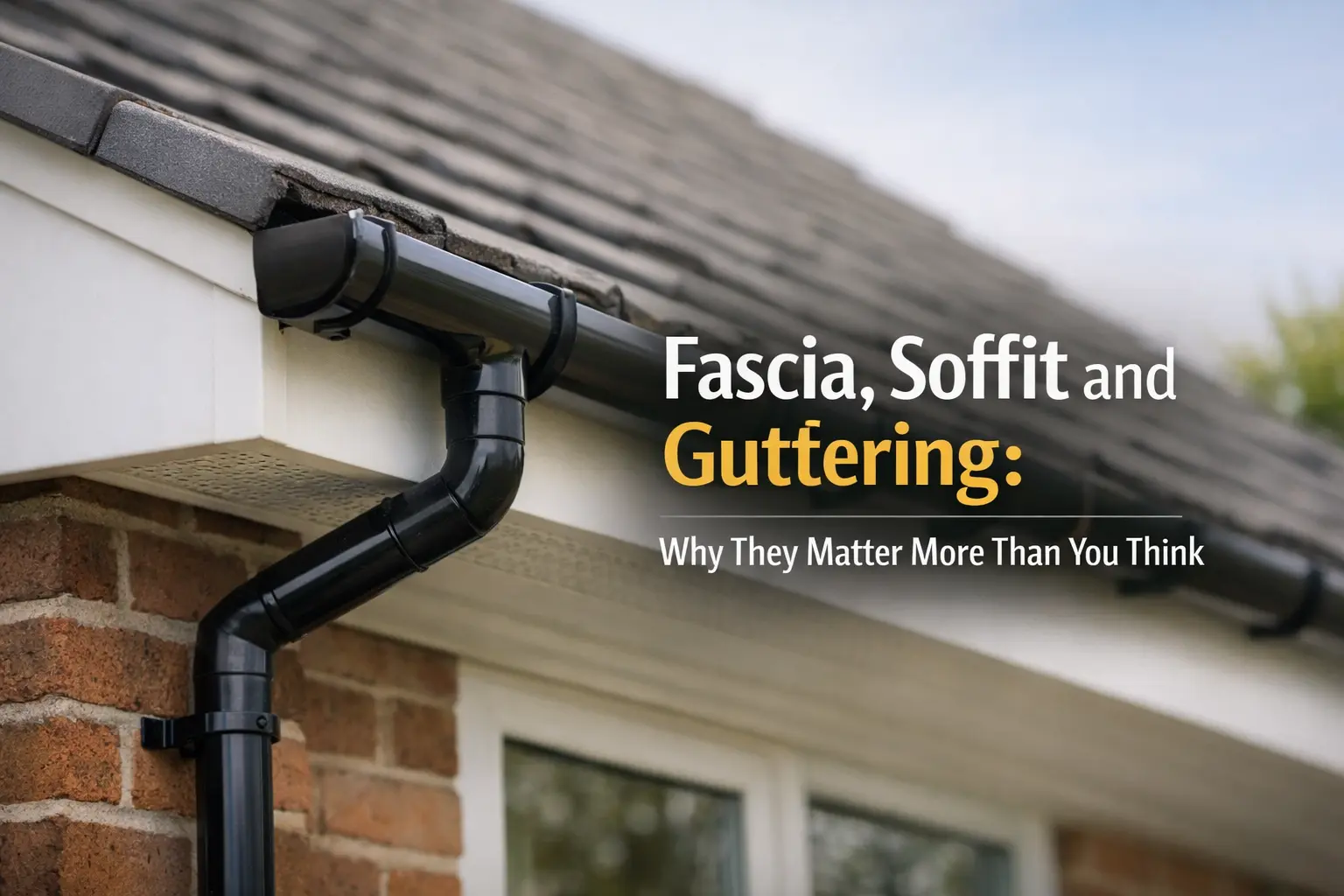
The fascia is the long, straight board that runs along the lower edge of your roof, mounted directly to the ends of the roof rafters. It is the board you see from the front of your house, running horizontally beneath the roof edge. The fascia serves two key purposes: it supports the bottom row of roof tiles or slates, and it carries the weight of the guttering system.
Fascia boards are typically made from timber (on older Dublin homes) or uPVC (on newer builds and replacements). Timber fascias are vulnerable to rot, especially after prolonged exposure to Dublin’s wet winters.
Soffits
The soffit is the horizontal board that sits underneath the fascia, tucked up beneath the roof overhang. If you stand at your front door and look up at the underside of the roof where it extends beyond the wall, the flat panel you see is the soffit.
Soffits protect the underside of the roof rafters from weather exposure and prevent birds, insects, and vermin from entering the roof space. Critically, many soffits also contain ventilation holes or strips that allow air to circulate through the attic — an essential function that prevents condensation, damp, and timber rot inside your roof.
Guttering
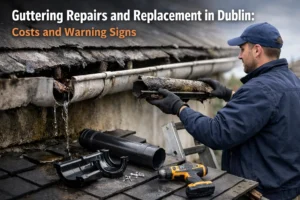
The guttering system is mounted to the fascia board and collects rainwater as it runs off the roof surface, channelling it through downpipes and away from the building’s foundations. Without functioning gutters, rainwater pours directly off the roof edge, saturating the walls, foundations, and surrounding ground — leading to dampness, erosion, and structural damage over time.
Why Your Roofline Matters More Than You Think
They protect the roof structure — fascia boards seal the gap between the roof edge and the outside air. Without them, rain, wind, and pests have direct access to the roof timbers and felt beneath your tiles or slates.
They prevent water damage — guttering carries thousands of litres of rainwater away from your home every year. When gutters fail, water cascades down exterior walls, penetrates brickwork, and pools around foundations.
They ventilate the roof space — soffit vents are critical for air circulation in the attic. Without adequate ventilation, warm, moist air from below condenses on cold roof surfaces, leading to damp, mould, and timber rot.
They protect your home’s appearance and value — rotten fascias, sagging soffits, and overflowing gutters are immediately visible from the street. They make a property look neglected and can reduce its value.
Warning Signs Your Fascias, Soffits, or Guttering Need Attention
Fascia Board Warning Signs
Peeling or flaking paint — the first sign that moisture is penetrating timber fascia boards. Once the protective paint layer fails, rot accelerates quickly.
Soft or spongy timber — if you can press your thumb into the fascia board and it gives, the timber is rotten and needs replacing.
Visible gaps between the fascia and the wall — warping or pulling away from the building indicates advanced deterioration.
Guttering pulling away from the roofline — this is often caused by rotten fascia that can no longer hold the gutter brackets securely.
Soffit Warning Signs
Sagging or dropping sections — soffits that are bowing or pulling away from the roofline need immediate attention.
Visible rot or discolouration — dark patches or crumbling sections on timber soffits indicate moisture damage.
Birds, wasps, or pests entering the roof space — gaps in the soffit allow wildlife to nest in your attic, causing noise, mess, and potential damage to wiring and insulation.
Blocked ventilation strips — paint, dirt, or debris covering soffit vents reduces airflow and increases condensation risk in the roof space.
Guttering Warning Signs
Overflowing during rainfall — the most obvious sign of a blockage or misalignment.
Sagging gutter sections — gutters that dip in the middle are collecting standing water, adding weight, and straining the brackets.
Green algae or plant growth inside the gutter indicates long-standing debris accumulation and poor drainage.
Water stains on exterior walls — vertical streaks or damp patches on walls below the roofline point to gutter failure.
Fascia, Soffit, and Guttering Costs in Dublin — 2026
The cost of roofline replacement depends on the material (timber or uPVC), the length of the roofline, access requirements, and whether scaffolding is needed. Here is a realistic breakdown for a typical Dublin home:
| Work | Typical Cost | Notes |
| Fascia board replacement (per m) | €40 – €70 | uPVC; timber may cost more |
| Soffit replacement (per m) | €35 – €60 | uPVC with ventilation strips |
| Guttering replacement (per m) | €30 – €55 | uPVC half-round or square-line |
| Full roofline package (average home) | €1,500 – €3,500 | Fascias, soffits, and guttering combined |
| Gutter clearing and repair | €100 – €300 | Clearing blockages, resealing joints |
| Downpipe replacement (each) | €80 – €150 | Including brackets and connections |
| Scaffolding (if required) | €300 – €800 | Depends on property height and access |
For an accurate quote tailored to your property, call JD Roofing on 087 389 3446. All quotes are free and come with no obligation.
Timber vs uPVC: Which Is Better for Dublin Homes?
Most older Dublin homes have timber fascias and soffits. While timber looks attractive, it requires regular painting and maintenance to prevent rot — something that Dublin’s wet climate makes challenging. Once rot sets in, timber fascias can fail quickly, pulling gutters away from the roofline and exposing the roof structure to water damage.
uPVC has become the standard replacement material for good reason. It does not rot, does not need painting, resists insect and bird damage, and maintains its appearance for decades. uPVC is available in a range of colours and finishes, including woodgrain effects that mimic the look of painted timber.
Our recommendation: for most Dublin homes, uPVC fascias, soffits, and guttering offer the best combination of durability, low maintenance, and value. JD Roofing supplies and fits high-quality uPVC roofline products from leading Irish suppliers.
How Your Roofline Connects to the Rest of Your Roof
Fascia, soffit, and guttering problems rarely exist in isolation. When a fascia board rots, the guttering mounted to it begins to sag. When gutters overflow, water saturates the roof edge and felt. When soffits fail, moisture enters the roof space and attacks the timber structure. This is why JD Roofing always inspects the entire roofline system together — not just the individual component that appears to have failed.
During any roofline assessment, we also check for related issues, including chimney flashing, lead flashing, damaged slates or tiles, and flat roof membrane condition. This comprehensive approach ensures nothing is missed.
Frequently Asked Questions About Fascias, Soffits, and Guttering
Q: How long do uPVC fascias and soffits last?
A: High-quality uPVC fascias and soffits typically last 20 to 30 years or more with minimal maintenance. They do not rot, do not require painting, and resist UV degradation. They are the most practical long-term choice for Dublin’s climate.
Q: How much does it cost to replace fascias and soffits on a semi-detached house?
A: A full fascia, soffit, and guttering replacement on a typical 3-bed semi in Dublin costs between €1,500 and €3,500, depending on materials and access. Call JD Roofing on 087 389 3446 for a free, no-obligation quote.
Q: Can rotten fascia boards cause roof damage?
A: Yes. Rotten fascia boards can no longer support the guttering system, causing gutters to sag or detach. This leads to uncontrolled water runoff against the roof edge, which penetrates the felt and timbers beneath. Rotten fascias also create entry points for birds, wasps, and other pests.
Q: How do I know if my soffits need replacing?
A: Key signs include visible rot or discolouration, sections that are sagging or pulling away from the roofline, bird or insect activity in the roof space, and increased condensation or damp in the attic. If your soffits are timber and over 20 years old, they are worth inspecting.
Q: Should I replace fascias, soffits, and guttering at the same time?
A: In most cases, yes. Replacing all three together is more cost-effective than doing them separately because the scaffolding and labour costs are shared. It also ensures the entire roofline system works together properly and gives a consistent, professional finish.
Q: Do you replace fascias and soffits outside Dublin?
A: Yes. JD Roofing provides roofline replacement services across Dublin, Kildare, Meath, and Louth. Contact us for a free site visit and quotation.
Your Roofline Is Your Roof’s First Line of Defence — Is It Holding Up?
Fascia boards, soffits, and guttering may not be the most glamorous parts of your home, but they are among the most important. When they fail, everything behind them is at risk — the roof timbers, the felt, the insulation, the attic, and the rooms below.
Rotten fascias, blocked gutters, and damaged soffits do not fix themselves. Every season they are left, the damage spreads further, and the repair bill grows.
Take five minutes to look up at your roofline. If anything looks wrong — peeling paint, sagging gutters, dark patches, gaps — call JD Roofing for a free inspection. We will assess the full roofline, explain what needs attention, and provide an honest, competitive quote with no obligation.
📞 Call Now for a Free Roofline Assessment:
087 389 3446 | 085 213 6394
📧 Email: sales@jdroofing.ie
🌐 Website: jdroofing.ie
📍 Get Directions: Google Maps
About JD Roofing
JD Roofing is a fully insured and experienced roofing company proudly serving Dublin, Kildare, Meath, and Louth. From emergency repairs to full roof replacements, chimney repairs to roof cleaning and coating, we deliver quality craftsmanship, honest pricing, and lasting results on every project.