If you have ever had a leak around your chimney, along a wall junction, or in a roof valley, there is a good chance the cause was failed lead flashing. Lead flashing is one of the most critical — and most overlooked — components of any roof. It creates a waterproof seal at every vulnerable junction where the roof surface meets a vertical structure like a chimney, wall, or vent pipe.
When flashing works, you never think about it. When it fails, water finds its way in — often causing damage that goes unnoticed for weeks or months. At JD Roofing, we specialise in lead flashing repair and replacement across Dublin, Kildare, Meath, and Louth. This guide explains what flashing does, where it is used, and how to spot problems before they become expensive.
What Is Lead Flashing?
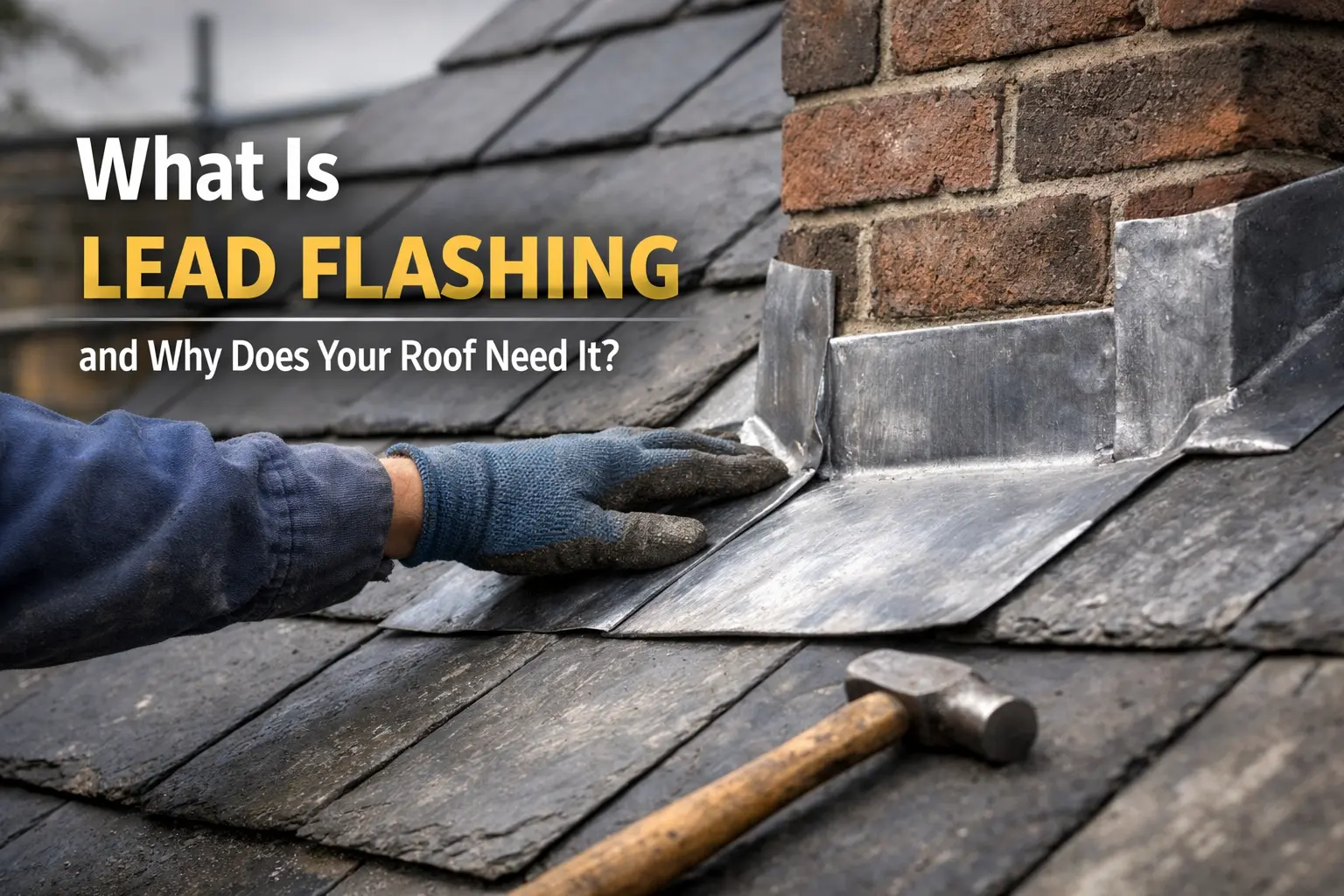
Lead flashing is a thin, malleable sheet of lead that is shaped and fitted around the junctions and transitions on a roof. Its purpose is simple but essential: to prevent water from penetrating the gaps where different surfaces meet. No matter how well your slates or tiles are laid, there will always be areas where the roof surface meets a wall, chimney, vent, or another roof plane. These junctions cannot be made waterproof by tiles alone — they need flashing.
Lead has been used for flashing on Irish roofs for centuries because it is naturally waterproof, extremely durable, and soft enough to be shaped precisely around complex junctions. When installed correctly, lead flashing can last 50 years or more.
Where Is Lead Flashing Used on Your Roof?
Around the Chimney
This is the most common location for lead flashing on Dublin homes. Your chimney penetrates through the roof surface, creating a gap on all four sides that must be sealed against rain. The flashing is typically fitted in two parts: a base flashing (or apron) at the front, and stepped flashing along the sides where the chimney meets the sloped roof surface. A back gutter or secret gutter sits behind the chimney to channel water around it.
In Roof Valleys
Roof valleys are the V-shaped channels where two sloping roof planes meet. They carry a large volume of rainwater and need a continuous lead lining to remain waterproof. Valley flashing takes significant punishment from water flow and debris, making it one of the areas most prone to wear over time.
At Wall Abutments
Where a sloping roof meets a vertical wall — such as where a single-storey extension meets the main house — step flashing is fitted into the mortar joints of the wall and dressed over the roof tiles to create a waterproof seal.
Around Skylights and Roof Windows
Any opening in the roof surface requires a flashing kit to seal the gap between the window frame and the surrounding tiles or slates. While modern skylights often use proprietary flashing kits, many older installations use traditional lead flashing.
Around Vent Pipes and Soil Stacks
Plumbing vent pipes that exit through the roof need a collar of lead flashing (or a lead slate) to seal the gap between the pipe and the roof covering.
Common Lead Flashing Problems on Dublin Roofs
Lifting or peeling flashing — over time, the mortar that secures the top edge of the flashing into the brickwork can crack and crumble. This allows the lead to pull away from the wall, creating a gap where water enters. Dublin’s freeze-thaw cycles accelerate this mortar deterioration significantly.
Cracking and fatigue — lead expands and contracts with temperature changes. Over decades, this repeated thermal movement can cause the lead to crack, especially on south-facing roofs that experience the greatest temperature variation. Thin or poor-quality lead is more prone to fatigue cracking.
Corrosion from cement contact — fresh cement or mortar in direct contact with lead causes a chemical reaction that corrodes the lead over time. This is a common issue where chimney repointing has been carried out without protecting the adjacent flashing.
Debris accumulation behind chimneys — the back gutter behind a chimney can become blocked with leaves, moss, and debris from the roof. When this channel fills, water backs up under the slates or tiles and into the roof space.
Poor original installation — unfortunately, not all flashing is installed to the correct standard. Lead that is too thin, too short, poorly dressed, or inadequately secured will fail prematurely. We regularly see flashing on Dublin homes that was installed incorrectly during the original build or during a previous repair.
Storm damage — high winds can lift and peel back lead flashing, particularly at exposed chimney locations and on roofs in coastal or elevated areas of Dublin. After any major storm, flashing should be checked.
How to Know If Your Lead Flashing Has Failed
Flashing failure often causes leaks that are difficult to trace because water can travel along timbers and battens before it shows up on a ceiling or wall. Here are the key signs to watch for:
Water stains near the chimney breast — damp patches, brown stains, or bubbling paint on the walls or ceiling near your chimney are classic indicators of flashing failure.
Damp patches along internal walls — where a roof meets an external wall (such as above an extension), damp appearing on the interior wall below the junction usually points to failed step flashing.
Visible gaps at the flashing line — from the ground, you may be able to see the lead pulling away from the brickwork or sitting proud of the wall surface.
Moss or debris build-up in valleys — if your roof valleys are clogged with debris, the lead lining beneath is under stress and may already be damaged.
If you spot any of these signs, arrange a professional inspection as soon as possible. JD Roofing offers free roof inspections that include a thorough check of all flashing points.
Lead Flashing Repair and Replacement Costs in Dublin — 2026
The cost of flashing work depends on the location, extent of the damage, and whether scaffolding is required. Here is a realistic breakdown:
| Service | Typical Cost | Notes |
| Re-seal / re-point flashing edge | €100 – €250 | Mortar repointing where lead meets wall |
| Patch repair to existing flashing | €200 – €500 | Repairing localised cracks or lifted sections |
| Chimney flashing replacement (full) | €400 – €900 | All four sides including back gutter |
| Step flashing replacement | €300 – €700 | Along wall abutment junction |
| Valley lining replacement (per m) | €80 – €120 | New lead valley lining, per linear metre |
| Vent pipe / soil stack flashing | €150 – €300 | Lead slate or collar replacement |
| Scaffolding (if required) | €300 – €800 | Depends on property height and access |
These are average estimates for Dublin in 2026. Every roof is different. For an accurate, no-obligation quote, call JD Roofing on 087 389 3446.
Lead Flashing Repair vs Replacement: How to Decide
Repair is appropriate when: the lead itself is in good condition, but the mortar securing the top edge has failed, a small localised section has lifted or cracked, or debris accumulation behind the chimney is causing water to back up (a clean-out and reseal will resolve this).
Full replacement is necessary when: the lead shows widespread fatigue cracking across multiple sections, the flashing is heavily corroded from cement contact, the lead is too thin or poorly installed and has failed prematurely, or the flashing is over 40–50 years old and deteriorating generally.
JD Roofing always uses Code 4 or Code 5 lead sheet for flashing work — the correct weight for Irish weather conditions. We never use thin lead, flashing tape, or silicone as a permanent repair. Proper lead flashing, correctly installed, will protect your roof for decades.
How Lead Flashing Connects to the Rest of Your Roof
Flashing problems rarely exist in isolation. When chimney flashing fails, water often damages the chimney mortar as well. When valley flashing leaks, the surrounding slates or tiles may also need attention. Water entering through failed flashing can rot the timber structure beneath, saturate insulation, damage fascia boards, and block guttering with debris.
This is why JD Roofing always inspects the surrounding roof area when attending to flashing — not just the flashing itself. If related issues are found, we provide a comprehensive quote covering everything. For storm damage, our emergency roofing service can secure the affected area quickly.
Frequently Asked Questions About Lead Flashing
Q: How long does lead flashing last on a roof?
A: Properly installed lead flashing using the correct code weight (Code 4 or Code 5) typically lasts 50 years or more. Thinner lead or poor installation can reduce this to 20–30 years. The mortar securing the flashing to the wall may need re-pointing sooner, typically every 15–25 years.
Q: How much does it cost to replace chimney flashing in Dublin?
A: A full chimney flashing replacement in Dublin typically costs between €400 and €900, depending on chimney size, roof access, and whether scaffolding is needed. Call JD Roofing on 087 389 3446 for a free inspection and quote.
Q: Can flashing tape be used instead of lead?
A: Self-adhesive flashing tape is sometimes used as a temporary fix, but it is not a substitute for proper lead flashing. Tape degrades quickly under UV exposure and temperature changes, and typically fails within 2–5 years. JD Roofing always uses traditional lead sheet for a lasting, professional repair.
Q: Why does my chimney keep leaking after being repaired?
A: Recurring chimney leaks are often caused by incomplete repairs — for example, repointing the mortar without replacing the deteriorated lead, or patching one side of the flashing while the other sides continue to fail. A comprehensive repair by an experienced roofer that addresses all four sides of the chimney and the back gutter is the only lasting solution.
Q: Is lead flashing safe to have on my roof?
A: Yes. Lead flashing on roofs poses no health risk to building occupants. The lead is external, sealed into the roof structure, and does not come into contact with drinking water or living spaces. Lead has been safely used in construction for centuries and remains the industry standard material for roof flashing in Ireland and the UK.
Q: Do you provide lead flashing services outside Dublin?
A: Yes. JD Roofing provides lead flashing repair and replacement across Dublin, Kildare, Meath, and Louth. Contact us for a free site visit and quotation.
Failed Flashing Is the Number One Cause of Hidden Roof Leaks — Is Yours Holding Up?
Lead flashing works silently in the background, keeping water out of the most vulnerable junctions on your roof. But when it fails — a lifted edge, a hairline crack, a crumbling mortar joint — water enters your roof space without any visible warning from the ground.
By the time a damp patch appears on your chimney breast or along an interior wall, the water has already been travelling through your roof for weeks. Rotten battens, saturated insulation, and damaged plaster are the hidden costs of flashing failure.
Do not wait for the stain to appear. JD Roofing offers free roof inspections that include a detailed check of every flashing point on your property. If your flashing has failed, we will explain the problem, show you the evidence, and provide an honest price to fix it properly — with lead that will last another 50 years.
📞 Call Now for a Free Flashing Inspection:
087 389 3446 | 085 213 6394
📧 Email: sales@jdroofing.ie
🌐 Website: jdroofing.ie
📍 Get Directions: Google Maps
About JD Roofing
JD Roofing is a fully insured and experienced roofing company proudly serving Dublin, Kildare, Meath, and Louth. From emergency repairs to full roof replacements, chimney repairs to roof cleaning and coating, we deliver quality craftsmanship, honest pricing, and lasting results on every project.